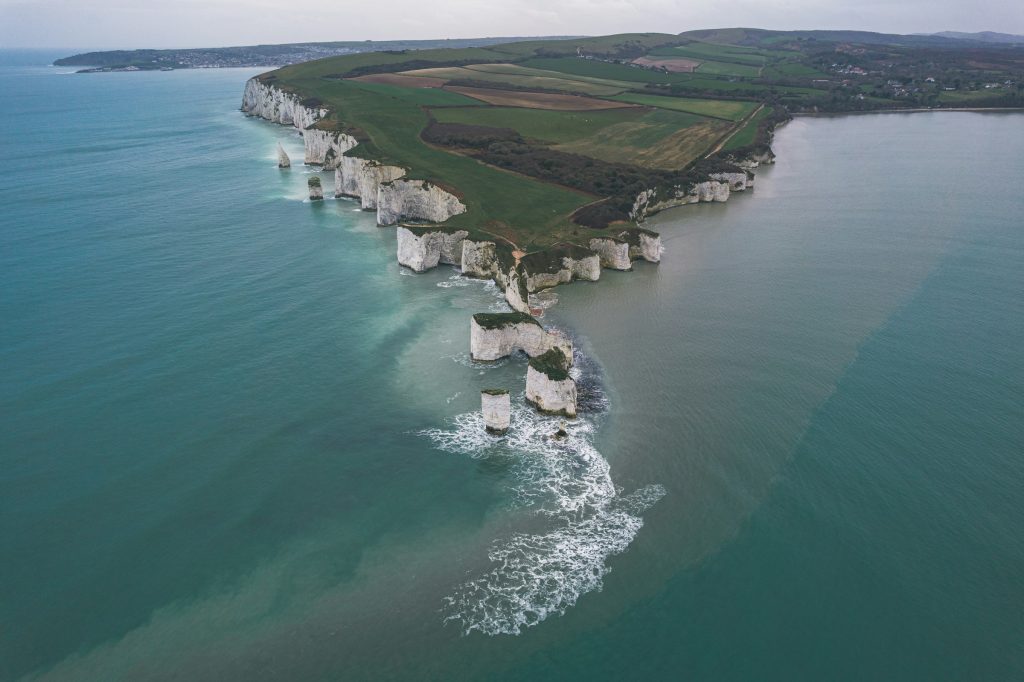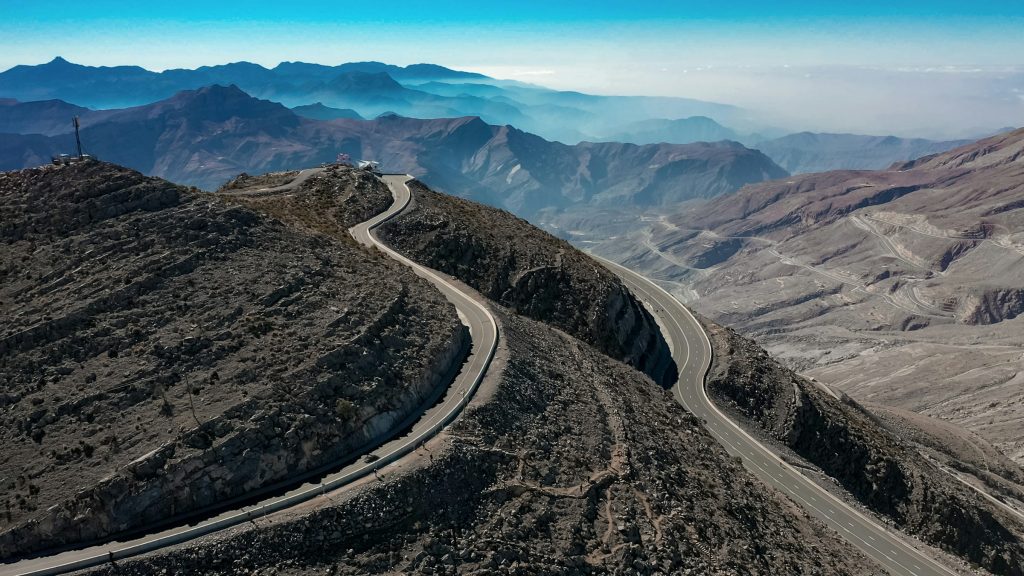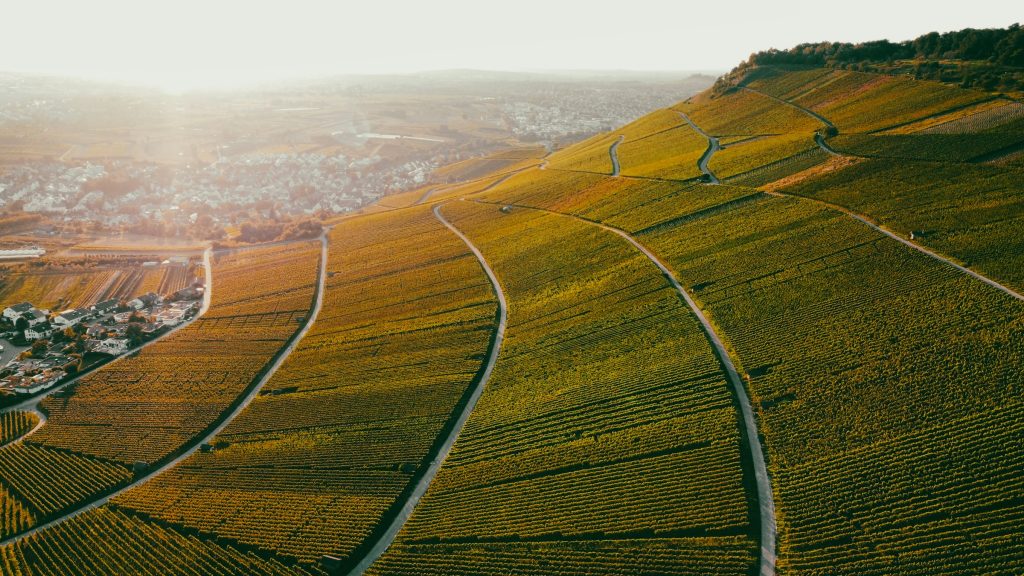
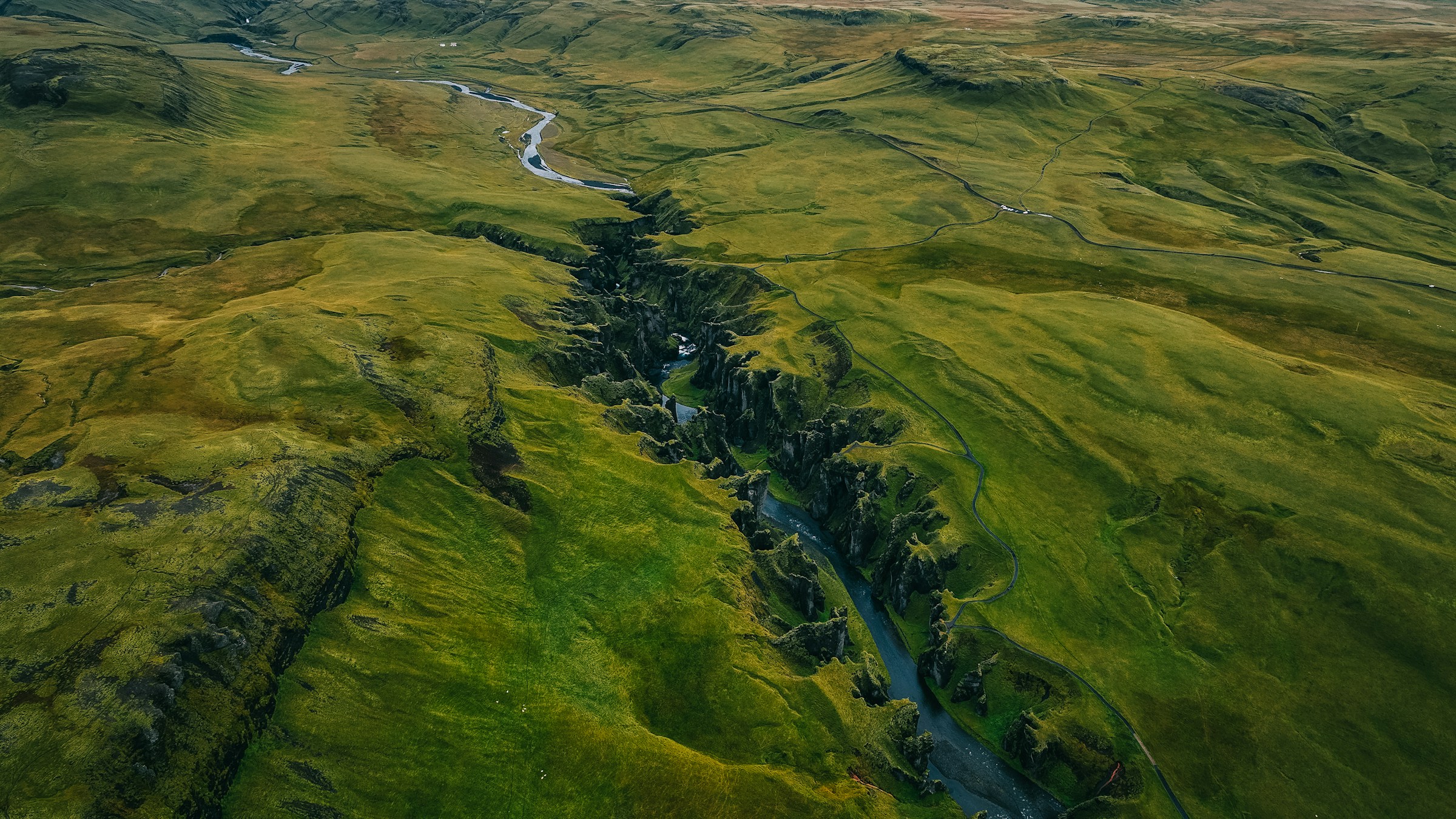
If you’ve been looking at aerial reels, you’ve seen FPV footage: fast, swooping, first-person flights that dive off cliffs and thread through warehouse doors. It’s eye-catching and it has its place. But for most films, campaigns and property work, stabilized camera drones are simply the better tool. It’s also the only kind we fly, so we’re not exactly neutral. Here’s our reasoning anyway.
Camera drones and FPV: two very different aircraft
A camera drone carries its camera on a motorized gimbal that keeps the picture level and steady however the aircraft moves. It holds its own position using satellite positioning and onboard sensors, which frees the pilot to concentrate on the shot rather than on staying in the air.
An FPV drone is flown entirely by hand, by a pilot wearing goggles that show a live view from the aircraft. It’s built for agility, and it usually carries a small, light camera fixed to the frame.
Both put a camera in the sky. What they deliver on screen, and what they ask of a production, is very different.
Picture quality you can grade
A stabilized camera drone can carry a much more capable camera: larger sensors, better glass and, on many models, flat log profiles that give your colorist room to work. Some carry more than one camera, including longer lenses for tighter, more compressed framing from a respectful distance.
That matters the moment aerial footage has to sit next to footage from your main camera. Aerials that match the rest of the film in sharpness, dynamic range and color are aerials that make the final cut.
Steady, precise, repeatable
Because the gimbal does the stabilizing, the footage is smooth straight out of the camera. Moves can be slow and deliberate, like a long push along the Malibu coastline or a gentle rise that reveals a house in the hills, in a way that’s very hard to pull off flying by hand.
Precision also means repeatability. A camera drone can hover, return to the same spot and fly the same move again a little slower or a little higher. Directors get options in the edit, and continuity across takes and days becomes manageable.
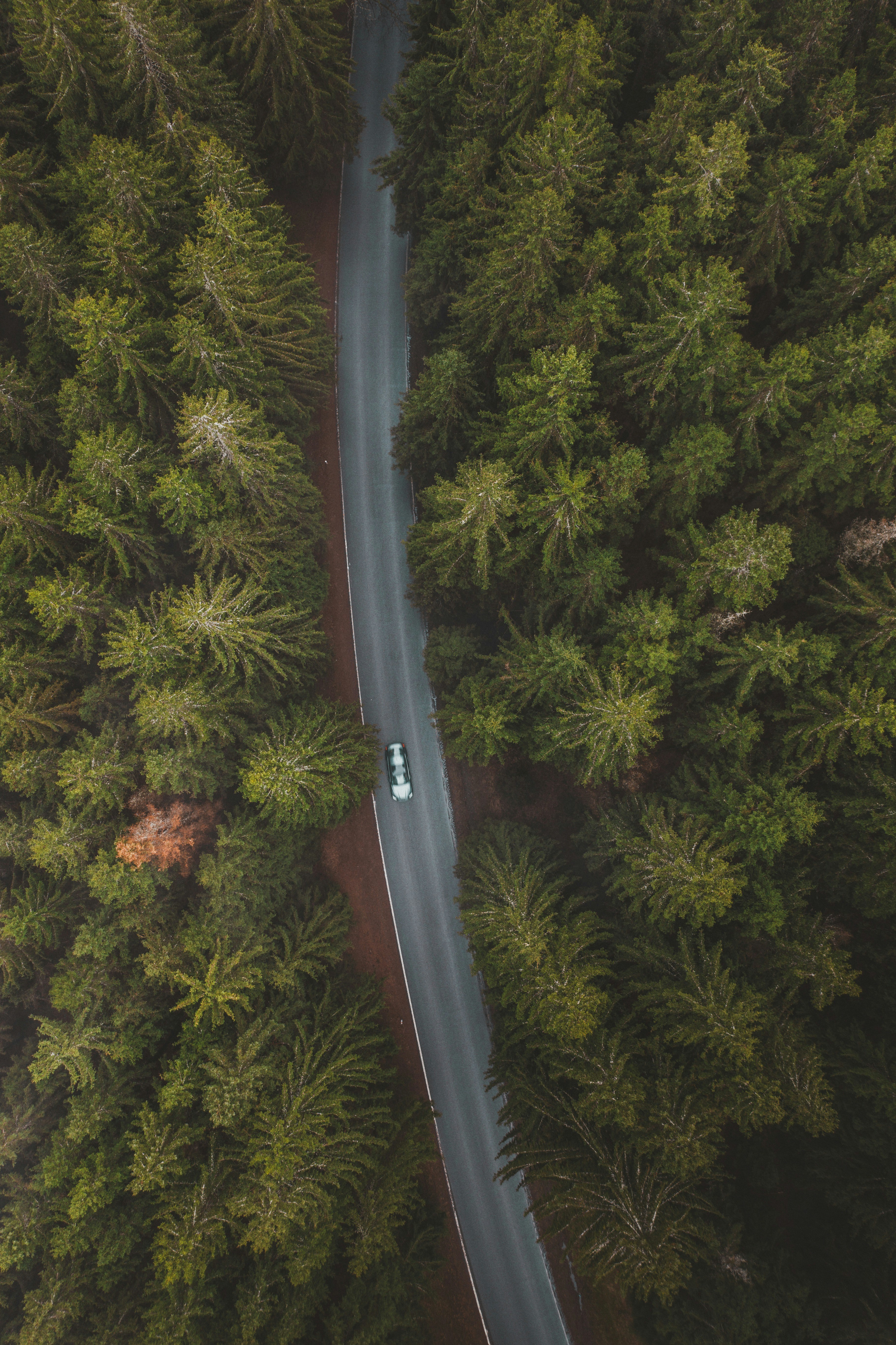
Everyone can see the shot
A camera drone sends a clear live picture to the ground, so the director, the client or the agency can watch each take, give notes and sign off on the spot. With FPV, the best view is usually inside the pilot’s goggles.
A calmer set
Camera drones are designed to be stable and predictable. They can hold position if a take needs to pause, and many have obstacle sensing and automatic return-to-home. The pilot keeps eyes on the aircraft and the surroundings.
FPV flying is fast and fully manual, often close to people, cars and buildings, and because the pilot is wearing goggles, the FAA rules typically require a separate observer to keep watch on the aircraft. On a working set, a busy beach or a city street, the steadier option is usually the safer one.
Longer flights, more takes
Camera drones typically stay up considerably longer on a battery than FPV aircraft. More time in the air means more takes per setup, more patience waiting for the light, and less time on the ground swapping batteries while the sunset happens without you.
“But we want energy”
A stabilized camera doesn’t mean slow or static. Tracking shots that follow a car along PCH, low passes over the surf, reveals that rise over a ridge, parallax moves that slide past a foreground palm, push-ins that build toward a subject: all of it is camera-drone territory. Put those shots in the hands of a good editor, with speed changes and cuts on movement, and you get plenty of energy without giving up image quality or control.
Where FPV fits
FPV is a specialist tool for very fast, very close moves: flying through a doorway, chasing a mountain bike down a single-track trail, a one-take journey through a building. If that kind of shot is the heart of your idea, an FPV specialist is the right call, and we’re happy to say so.
For everything else, from establishing shots and landscapes to architecture, campaigns, documentaries and most action, a stabilized camera drone gives you a better picture, more control and a smoother day.
Not sure what your project needs? Send a few reference clips and we’ll tell you honestly.