People imagine Southern California weather as one long sunny afternoon. Anyone who has stood on a beach in Ventura at 9am in June knows better. The weather here has real personality, and for aerial work it decides two things: whether we can fly safely, and whether the footage is merely fine or genuinely beautiful.
The marine layer
From late spring into early summer, a blanket of low cloud often rolls in off the Pacific overnight and sits over the coast until late morning. Sometimes it burns off by eleven. Sometimes it stays all day at the beach while it’s ninety degrees in the San Fernando Valley, fifteen miles away.
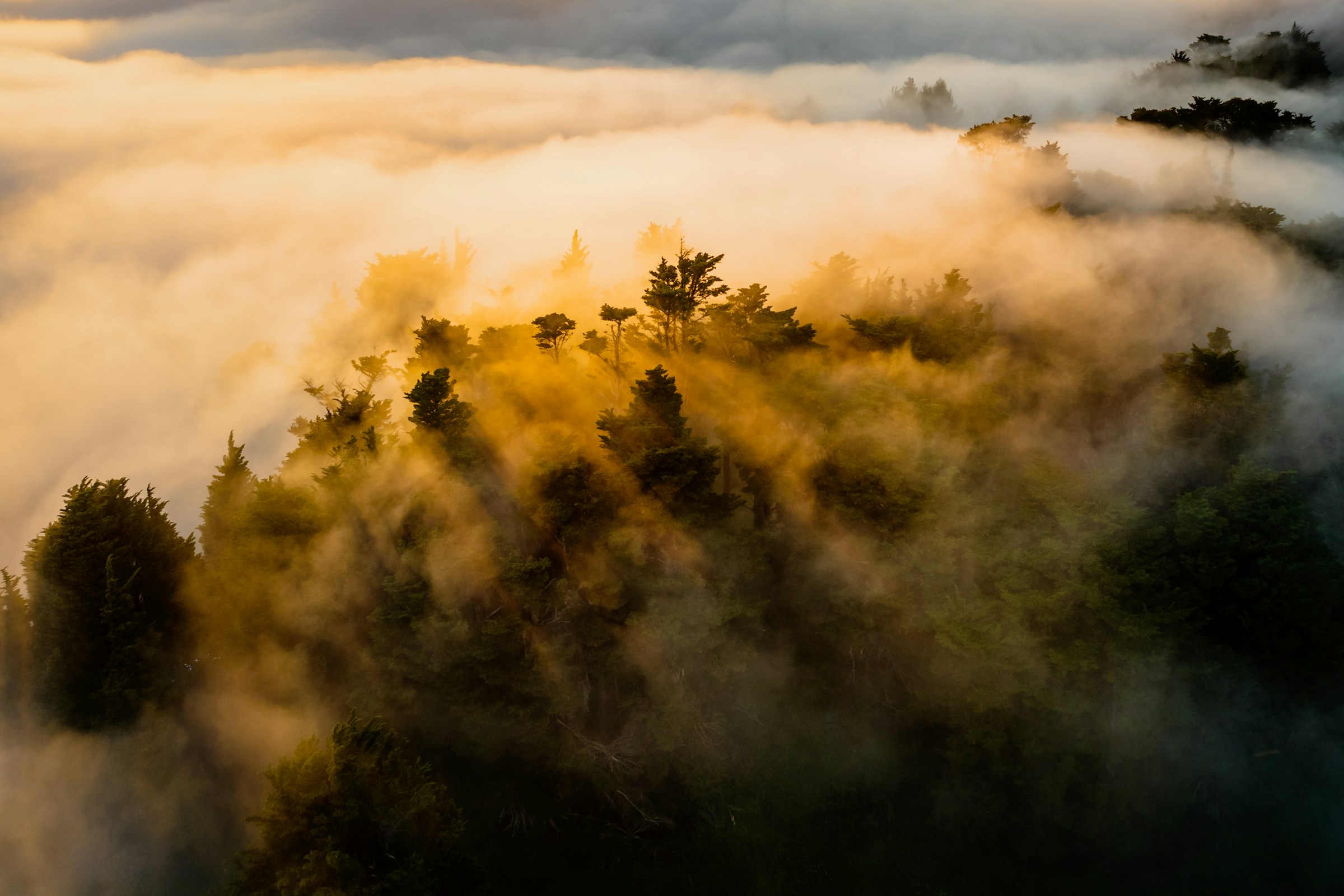
For aerials, the marine layer is two things at once. It’s a scheduling problem: a golden-hour shot at the beach may need a second window, and low cloud ceilings can limit how high we can safely fly. But it’s also a gift. Shot from just above, the top of the marine layer can look like a sea of its own, and the soft, even light underneath is lovely on architecture, forests and moody coastlines.
Santa Ana winds
In fall and winter, the Santa Anas blow hot, dry air down from the high desert toward the coast. They’re strongest through canyons and passes, which is exactly where some of the best roads and landscapes are. Strong, gusty wind is the most common reason we delay a flight, and conditions a few hundred feet up can be very different from what you feel on the ground.
The upside? Santa Ana days are often crystal clear. When the wind drops, the visibility can be extraordinary, with the Channel Islands sitting sharp on the horizon.
Golden hour, coast-style
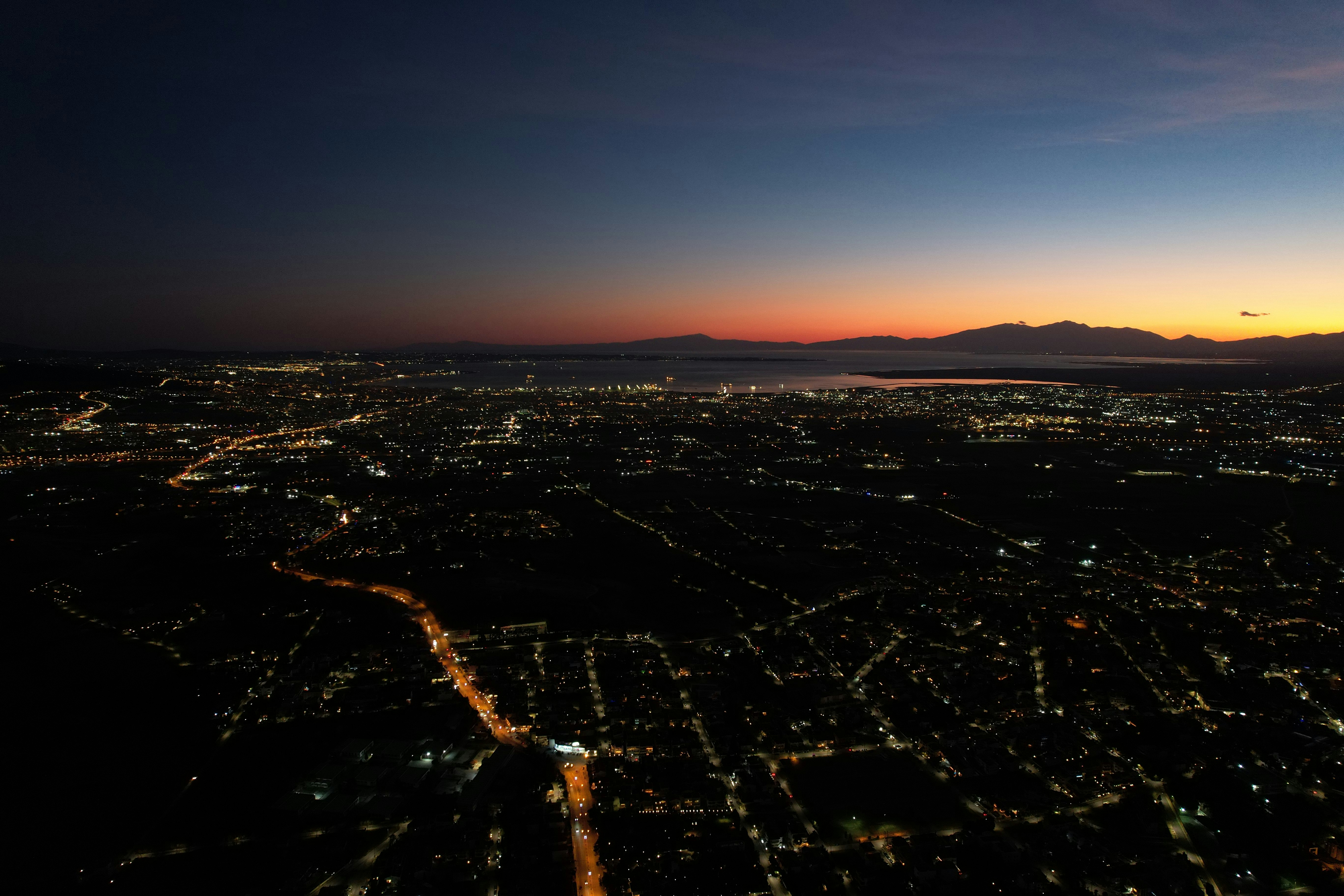
Along much of the Ventura and Malibu coast the sun sets over the water, and on a clear evening the golden hour runs long and warm. Low sun throws long shadows that reveal the shape of bluffs and hills, and the ocean picks up the color of the sky. It’s the most requested light for good reason.
Midday has its uses too. High sun lights up shallow water and shows off its color, which is perfect for top-down shots of coves and reefs. And blue hour, the twenty minutes or so after sunset, is when downtown and the coastal towns light up against a still-blue sky.
Fire season
Wildfires are part of life here, and they bring temporary flight restrictions with them, sometimes covering large areas and appearing with little notice. Smoke can also turn a clear day hazy. We check restrictions before every shoot, and if a fire is burning anywhere near a location we’ll talk honestly about whether to go ahead.
Planning for all of it
A few habits make the weather work for you rather than against you. Map the light for each location and date, and know which shots need which light. Watch the forecast closely in the days before, with special attention to wind. Hold backup dates for weather-dependent shots. Capture the most important shots first when conditions are good. And stay flexible, because some of the best footage comes from changing the plan when the sky does something unexpected.
You can’t schedule a perfect sky. You can be ready when one turns up.
Nobody can promise the weather. What a good aerial team can promise is a plan, honest communication about the risks, and clear agreement up front about how weather delays are handled. If your project depends on a particular look, a sunrise, a misty morning, the city at dusk, tell us early. The more time there is to plan, the better your chances of catching it.